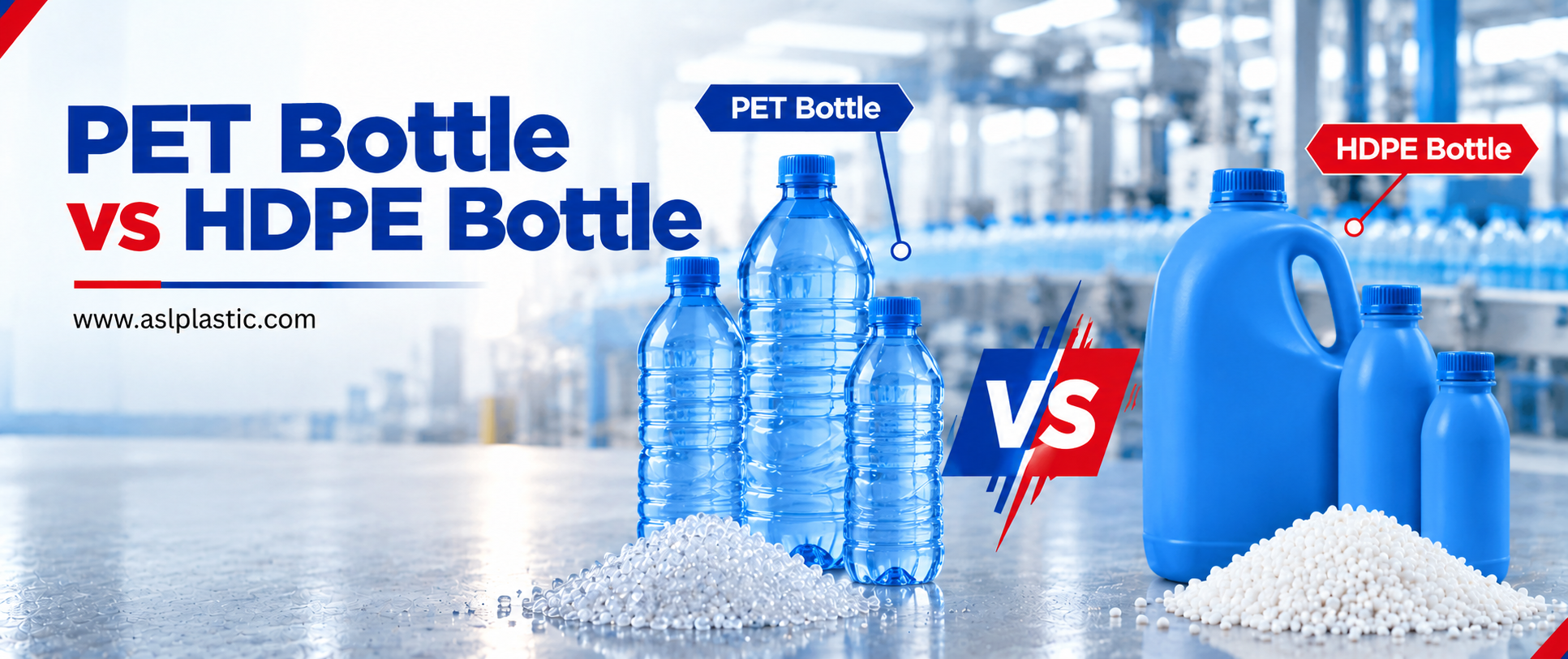
Choosing a plastic bottle is not only about shape, size or price. The material matters too. It decides how the bottle looks, how it handles daily use, and whether it suits the product you want to pack.
PET and HDPE are two of the most common materials for plastic bottles. Both are used in many industries, but you cannot swap one for the other in every case.
For example, an edible oil brand may want a clear bottle so customers can see the oil. A floor cleaner brand may need a tougher, opaque bottle that survives storage and transport.
So which is better, a PET bottle or an HDPE bottle? Let’s compare their features, uses, benefits and limits.
What Is a PET Bottle?
PET stands for Polyethylene Terephthalate. It is used to make bottles for beverages, food, personal care items and other liquids.
Its best feature is clarity. A clear PET bottle lets customers see the product inside, which helps when looks matter.
PET bottles are also light and come in many shapes and sizes. With the right design, they stay strong without adding extra weight.
Common uses of PET bottles:
Drinking water and beverages
Edible oil
Food products
Cosmetics and personal care liquids
Sanitizers and some cleaning products
If you want attractive packaging that shows off your product, PET is a good choice. You can see ASL Plastic’s PET bottles in different sizes.
What Is an HDPE Bottle?
HDPE stands for High-Density Polyethylene. It is known for toughness and resistance to many chemicals.
Unlike clear PET bottles, HDPE bottles are usually opaque or semi-clear. They are a popular pick when you need a sturdy bottle for storage, handling and transport.
Bottle performance also depends on wall thickness, design, cap and the liquid inside.
Common uses of HDPE bottles:
Household cleaning liquids
Toilet and floor cleaners
Personal care products
Agrochemical products
Industrial liquids and some chemicals
Lubricants and other compatible products
If durability and chemical compatibility matter most, HDPE is often the better fit. Browse ASL Plastic’s HDPE lotion bottles and plastic HDPE jars for examples.
PET Bottle vs HDPE Bottle: Key Differences
Feature PET Bottle HDPE Bottle
Full form Polyethylene Terephthalate High-Density Polyethylene
Look Usually clear and transparent Usually opaque or semi-clear
Product visibility Excellent Limited in most standard designs
Strength Good strength for its use Tough, with good impact resistance
Chemical resistance Depends on the chemical and bottle design Resists many chemicals, but always check compatibility
Flexibility Generally more rigid Generally more flexible
Typical uses Beverages, edible oils, cosmetics Cleaning liquids, industrial products, compatible chemicals
Best when Customers need to see the product You need a sturdy, practical container
Recycling code 1 2
Note: Neither material suits every product. Always check the liquid, storage conditions, bottle design and safety rules before you decide.
- Appearance and Product Visibility
The most visible difference is transparency.
PET bottles are used when customers should see the product before buying. This works well for edible oil, beverages and some cosmetics.
HDPE bottles are mostly opaque or semi-clear. They suit products that don’t need to be seen, or brands that want a solid look.
Which to choose? Pick PET if visibility matters. Pick HDPE if a solid, practical bottle suits your product better.
- Strength and Durability
Both materials perform well, but in different ways.
A well-designed PET bottle is rigid and strong. How well it works depends on the product weight, bottle shape and how it is handled.
HDPE is valued for toughness. It handles knocks and rough handling well, which is why cleaning and industrial products often use it.
A thicker bottle is not always a better bottle. Wall thickness and shape should match your product and conditions.
Before a bulk order, test how the bottles behave during filling, stacking and transport.
- Chemical Resistance
Chemical compatibility is one of the most important checks for any liquid product.
HDPE resists many acids, alkalis and other chemicals. That is why it is common for household cleaners and some industrial liquids.
PET also works with many products, but it depends on the chemical, its strength, the temperature and how long it stays in the bottle.
Do not assume any bottle suits every chemical. The wrong material can cause leaks, bottle damage or spoiled product.
For chemical packaging, confirm compatibility with your bottle manufacturer and run tests before full production.
- Weight and Handling
Both PET and HDPE bottles come in light designs. The real weight depends on capacity, wall thickness and manufacturing specs.
PET is often chosen when you want a light, clear and fairly rigid bottle. HDPE can also be made light while staying tough.
If you order thousands of bottles, even a small weight difference adds up in material and transport cost. So compare actual bottle weight, performance and price per piece, not just the material name.
- Which Is Better for Food Packaging?
It depends on the food product.
PET is widely used for drinking water, beverages and edible oils. Its clarity helps customers recognise the product.
HDPE is also used for some food packaging, as long as the container meets food-contact standards.
For both, confirm the bottle is made from food-contact material and follows the rules that apply to you. The resin type alone does not make a finished bottle food-safe.
Also think about shelf life, light sensitivity, filling temperature and storage needs. ASL Plastic also offers food packaging options.
- Which Is Better for Cleaning Products?
HDPE is often a strong choice for floor cleaners, toilet cleaners and other household cleaning liquids, thanks to its toughness and chemical resistance. See ASL Plastic’s toilet cleaner bottles as an example.
The exact formula still matters. Some cleaning products have ingredients that need a specific material or extra testing. PET can also work for some formulas once compatibility is confirmed.
If your product needs a sprayer or dispenser, test the whole pack: bottle, cap, seal and pump together. They must work as one system to prevent leaks. You can check plastic spray bottles and trigger spray bottles, plus matching plastic cap closures.
- Cost and Bulk Purchasing
There is no rule that PET is always cheaper than HDPE, or the other way round.
The final price depends on:
Bottle size and dimensions
Material weight and resin cost
Shape and mould needs
Colour and clarity
Cap, closure and dispenser
Order quantity and transport
Quality checks and special specs
For bulk orders, compare quotes for bottles with similar capacity, weight and performance.
A cheap bottle can cost more in the end if it leaks, damages your product or slows down your filling line.
- Environmental Impact and Recycling
PET and HDPE are both recyclable. PET carries recycling code 1 and HDPE carries code 2.
Whether a bottle actually gets recycled depends on local collection, sorting, contamination and available recycling facilities.
Both materials can be used in designs that need less plastic, as long as the bottle still performs well. To cut packaging waste, look at bottle weight, recyclability, product protection and local recycling options together. Any recycling claim should match the real material and the facilities in your market.
PET vs HDPE: Which Should Your Business Choose?
Choose PET bottles if:
You want clear packaging
Customers should see the product inside
You pack beverages, edible oils or suitable cosmetics
Your product is compatible with PET and the bottle suits your filling line
Choose HDPE bottles if:
You need a tough, practical container
You pack compatible cleaning or industrial liquids
Transparency is not important
The bottle must handle regular handling and transport
Not sure? Share your product type, capacity and use with your packaging supplier. That is usually enough to narrow down the right material and design.
Frequently Asked Questions
What is the main difference between PET and HDPE bottles?
PET bottles are usually clear and rigid. HDPE bottles are usually opaque and tougher, with strong resistance to many chemicals.
Is PET or HDPE better for edible oil?
PET is commonly used for edible oil because it is clear and lets customers see the product. Always confirm the bottle meets food-contact requirements.
Which bottle is better for floor and toilet cleaners?
HDPE is often preferred for these products because of its toughness and chemical resistance. Check your exact formula first.
Are PET and HDPE bottles recyclable?
Yes, both can be recycled. PET has recycling code 1 and HDPE has code 2. Actual recycling depends on local facilities.
Is a PET bottle cheaper than an HDPE bottle?
Not always. Price depends on size, weight, design, closure, order quantity and more. Compare quotes for similar specs.
PET and HDPE Bottles from ASL Plastic
Every business has different packaging needs. A beverage brand may need a clear PET bottle, while a cleaner brand may need an HDPE bottle with a secure cap.
ASL Plastic Private Limited has made plastic products since 1948 at its facility in Dankuni, West Bengal. Its range includes PET bottles, HDPE bottles, spray bottles, jars, jerry cans, buckets, drums and other plastic packaging. The company serves food and beverage, personal care, household cleaning, agriculture and industrial customers.
You can explore the bottle range and share your needs for capacity, shape, colour and closure. Please confirm product compatibility and specifications before placing an order.
Want to know more? Read our guide on HDPE containers, their uses and benefits, check the PET bottle range, or contact ASL Plastic for a quote.
Final Thoughts
PET and HDPE bottles both have a place in modern packaging. The real question is which one matches your product.
PET is often preferred for clear packaging. HDPE is widely used when toughness and chemical resistance matter.
Don’t choose on looks or price alone. Think about product compatibility, filling conditions, transport, storage and total packaging cost.
The best bottle protects your product, works reliably for your business and meets your customers’ needs.
Planning a bulk order of PET or HDPE bottles? Get in touch with ASL Plastic to find the right packaging for you.